








It is key for those working in education to fully understand safeguarding and how to implement its principals while working with children. While every school should have a safeguarding policy, it is important that each individual working in a school understands their role in safeguarding pupils. In this article LMP Education will breakdown some of the key safeguarding principles you need to understand as an educator.
What is safeguarding
Safeguarding is the proactive process of protecting children, young people, and adults with care needs from abuse, harm, or neglect, while promoting their welfare and rights. It involves implementing preventative measures and acting upon concerns to ensure safety, enabling individuals to live free from harm.
In a school environment, this approach is focused on protecting the children and young people attending the school, implementing robust child protection policies, staff codes of conduct, and anti-bullying policies.
Safeguarding principals
Child-Centred Approach
This means that the policies and procedures created need to be placing the best interests of the child first, ensuring their voice is heard and respected in all decisions.
Prevention
Schools must implement safe recruitment (background checks), provide regular training, and educate children on how to keep themselves safe.
Protection
An educational setting should ensure that they provide their pupils with a secure physical and emotional environment, with clear procedures for identifying and reporting concerns, as outlined in “Keeping Children Safe in Education”.
Partnership
Safeguarding is everyone’s responsibility, and so the school should collaborate with parents, families, local authorities, and other agencies to protect children.
Proportionality
If safeguarding concerns arise, the setting must take appropriate, risk-based action that is suitable for the specific situation.
Accountability
The school should ensure everyone understands their responsibility and maintains up-to-date knowledge to protect children.
Your job as an individual working in education
Safeguarding is not the sole responsibility of a safeguarding team and upper management. Ensuring the policies are followed and that children are protected is the responsibility of everyone working at the school, from permanent staff to apprentices and contractors.
As an educator, you need to make sure that you fully understand your setting’s safeguarding procedures and processes, know what warning signs to look for, and that you have received the appropriate safeguarding training.
Start a career in safeguarding
Working in safeguarding can be a fulfilling and inspiring career route. If your current role has some in depth safeguarding responsibilities, you may look to progressing into a fully safeguarding focused job where you are more involved in policy and guiding the school in the right direction.
If this career path sounds exciting, an apprenticeship may the best path for you. Through an apprenticeship programme, you can continue to work in your current setting while gaining a qualification that can set you up for success in your future career.
Safeguarding Support Officer apprenticeship
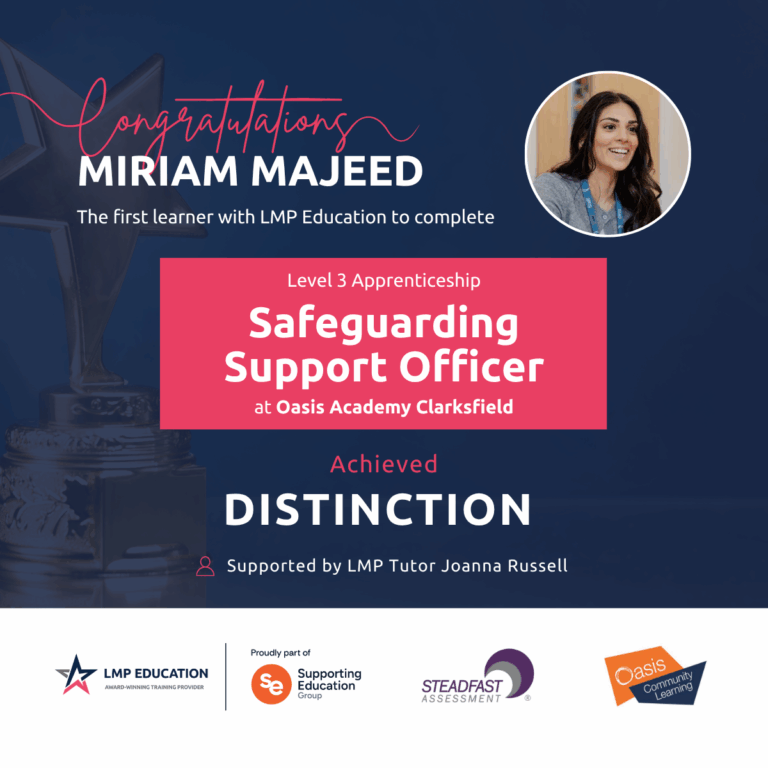
LMP Education’s Level 3 Safeguarding Support Officer Apprenticeship is ideal for those looking to develop safeguarding skills. It is designed to promote best practice, ensure compliance and improve responses to safeguarding concerns.
This funded training programme provides structured training to develop skills, knowledge and behaviours to protect vulnerable individuals including children, young people, adults and others in the community.
Gain the knowledge, skills and confidence to safeguard vulnerable individuals, serving as the first point of contact for concerns. Learn to recognise early signs of abuse, conduct risk assessments, and collaborate with agencies to ensure timely interventions.
Emily Nicholson, current Safeguarding Support Officer apprentice has said about her experience: “through this apprenticeship I’ve broadened my understanding of Safeguarding as a whole, from early signs of abuse, to when an allegation is made. I thoroughly enjoyed learning about Safeguarding theory and how our childhood attachment style heavily shapes our future landscapes. Through my independent learning and the support of my tutor, I feel more confident in my abilities to support during difficult circumstances and ensuring I efficiently manage safeguarding concerns.”
Learn more about the Safeguarding Support Officer programme.
Safeguarding Support Officer