









As the dust settles on the announcement of the Special Educational Needs and Disabilities (SEND) reform made earlier this year, schools are looking ahead for ways to improve their existing SEND provision. An often-overlooked force that can be utilised as support staff, in particular Teaching Assistants (TA). This article will discuss the role TAs play in supporting SEND pupils and how they can be better trained ahead of the SEND reform.
The SEND crisis
One of the reasons for the SEND reform is the SEND crisis that the education sector has been facing for the last few years. Year on year the number of pupils requiring SEND support has been rising which puts a strain on an already struggling education system. SEND pupils require specialist care and individual attention which is not always available in some classrooms.
Budget constraints and the lack of qualified staff have made it harder for schools to be able to support SEND pupils. The new SEND reform aims to mitigate this through investing in SEND provision across all schools in the UK and offering earlier, focusing on identifying needs through data-driven tools.
The importance of Teaching Assistants in Special Education
Teaching Assistants are often the unsung heroes in the realm of special education. Their presence in the classroom is vital for several reasons. They serve as an essential support system for both teachers and pupils, ensuring that the educational process is as smooth and effective as possible. Without their contributions, many pupils with SEN would struggle to keep up with their peers.
Having more teaching assistants can help support pupils with 1-2-1 needs and allow them to receive the support they require. For many pupils, especially those who are neurodivergent having a trusted teacher who they can bond with will support their learning and help them achieve.
SEND training for Teaching Assistants
Teaching Assistant Apprenticeships can be a great way for schools to recruit or upskill staff to be able to support SEND with minimal impact on budget. Apprenticeships are funded through the Growth and Skills Levy allowing schools to train up their staff at a lower cost or very often free.
Most Teaching Assistant qualifications cover SEND within the curriculum, however, LMP Education offers a specialised SEND pathway for learners who wish to focus on SEND.
Level 3 Teaching Assistant SEND Pathway
The course is ideal for Teaching Assistants working in mainstream or specialist schools who want to achieve a recognised qualification whilst gaining additional support for the SEND responsibilities. Any Teaching Assistant in a school may undertake this programme, with the DfE recommending all schools having some form of SEND responsibilities or specialism.
Learn more about the Teaching Assistant SEND pathway programme.
Level 5 Specialist Teaching Assistant
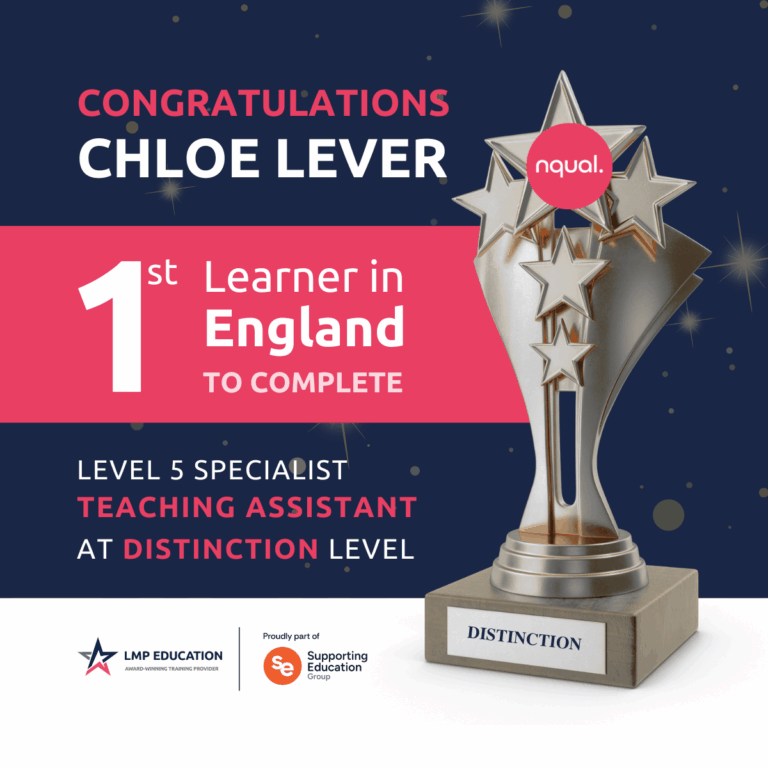
The Level 5 Specialist Teaching Assistant Programme is the natural progression route for teaching assistants who look to further their career in education. This programme offers learners the opportunity to specialise in a particular field of study such as SEND as well as social and emotional wellbeing, or specific curriculum provisions like early reading or EAL (English as an Additional Language).
Learn more about the Specialist Teaching Assistant programme.
Level 4 Early Intervention Practitioner
LMP Education has recently launched a brand-new Level 4 Early Intervention Practitioner (also known as Pastoral Support Practitioner) apprenticeship to help schools upgrade their early intervention provision. This programme is aimed at current staff who are passionate about pastoral support and early intervention and can be the ideal progression path for an existing teaching assistant.
An Early Intervention Practitioner in a school setting identifies and supports children of all ages with developmental delays, disabilities, or behavioural challenges. They implement tailored strategies, such as Individualised Education Plans (IEPs) or small-group interventions, to improve learning outcomes, boost social-emotional skills, and prevent long-term difficulties.
Learn more about the Level 4 Early Intervention Practitioner pprenticeship programme.
While the SEND reform plans are still unfolding, schools will need to ensure all areas of their operations are updated ahead of it. By investing in support staff through apprenticeships schools can ease some of the burden and help schools be prepared for the upcoming changes. If you would like to discuss Teaching Assistant apprenticeships or how to upskill a current member of staff to support with SEND, book a discovery call with the LMP Team.
Book a discovery call