








Safeguarding training is crucial within schools. Not only does it ensure that staff are able to adequately support and protect pupils, but it is also an Ofsted requirement. For most schools, updated safeguarding training is required once a year, usually in the form of a one-day course. However, this may not be enough to ensure that safeguarding professionals are fully equipped to dealing with everchanging safeguarding concerns.
In this article we will discuss how you can support the safeguarding provision of your school while developing a meaningful career within the sector.
What is safeguarding?
Safeguarding describes protecting people’s health, wellbeing and human rights. When you follow safeguarding best practices, you are working to prevent harm, abuse, and neglect.
Safeguarding works to protect those who are considered vulnerable in society which includes children and young people but also vulnerable adults (elderly or those with physical or learning disabilities and mental health issues). Anyone can be subject to neglect and abuse regardless of their age or background, which is why it is vital that safeguarding is addressed within any workplace.
The need for safeguarding training
Designated Safeguarding Leads (DSL) and Designated Safeguarding Officers (DSO) are required by Ofsted to undertake formal safeguarding training. However, many relay on one-day training courses once a year.
By undertaking a longer more formal training programme, schools can reduce the pressure on DSLs and DSOs by providing them with formal training and support.
These programmes can also serve as career development opportunities for those who currently perform safeguarding duties within their role and are looking to move to an official safeguarding job. There is a lack of awareness within schools of the levy. Schools and MATs pay £180 million annually into the levy, but only 22% of it is utilised. With one-day safeguarding training courses costing upwards of £250, using the apprenticeship levy for your safeguarding training could help schools in saving hundreds of pounds while getting a fuller qualification experience.
The role of a Safeguarding Support Officer
A Safeguarding Support Officer will be the first point of contact when there is a safeguarding concern. This is a crucial role in protecting vulnerable individuals from harm and they will support staff and ensure that the school adheres to safeguarding policies and procedures. They will be supporting the Designated Safeguarding Lead in conducting initial risk assessments, triaging and signposting the to the most appropriate person or external agency for support.
Safeguarding Support Officer Funded Training
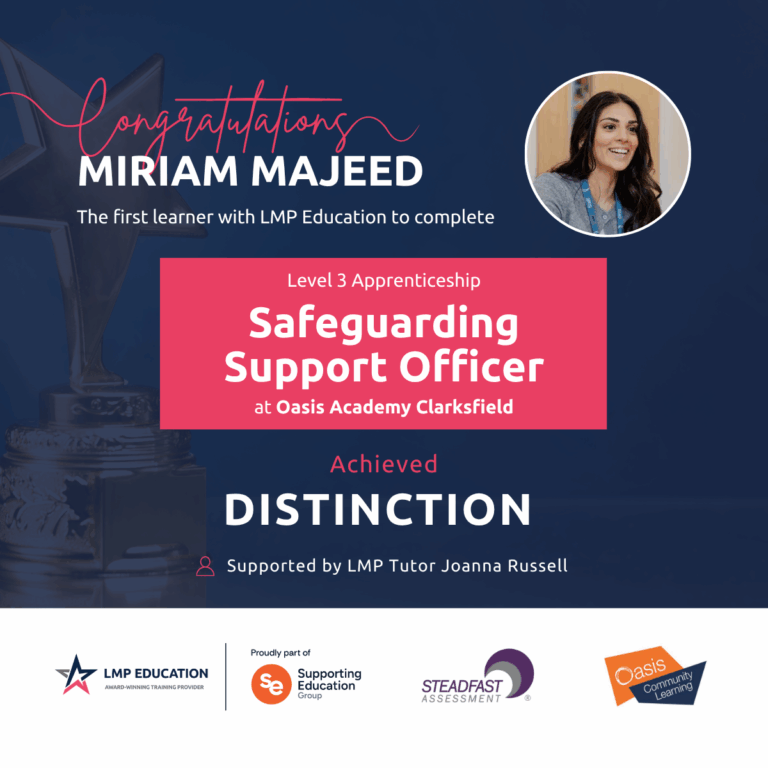
LMP Education, the UK’s top apprenticeship training provider, delivers a bespoke Safeguarding Support Officer apprenticeship. This funded training programme is aimed at individuals who are currently performing safeguarding duties within their school and would like to gain further qualifications to support their work.
To start this training programme, candidates must already, or have the opportunity to, do the following as part of their job description:
- Be a first point of contact for safeguarding concerns.
- Maintain up to date safeguarding logs and registers.
- Provide safeguarding support to employees working in their own organisation.
- Support the management of a safeguarding caseload.
- Assist with staff training on relevant safeguarding policies and procedures.
- Contribute to and prepare for external safeguarding inspections, reviews and audits.
The programme is fully funded for the learner, and can be partly or fully funded for the employer through the Growth & Skills levy.
To learn more and apply for the Safeguarding Support Officer apprenticeship, check out the programme page!
Apply now